
UTS Experience
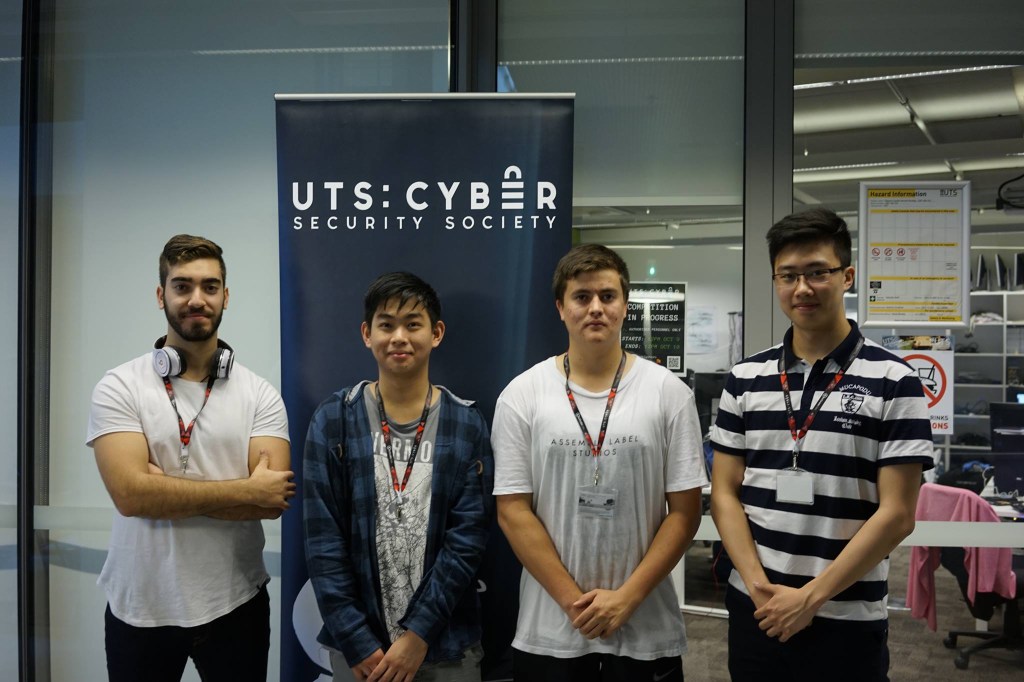
UTS Cyber Security Society
At the start of semester 2 (July 2018), I took it upon myself to push further and embrace a new skill set that I could apply to my career. Cybersecurity was the answer! I have always been interested in cybersecurity and the fundamentals behind digitally breaking down and manipulating products. UTS has a cybersecurity organisation run by students for students.
Every Thursday after class, the society would host workshops where students such as myself could learn some new skills. We would work on challenges such as PicoCTF and for more intermediate enthusiasts, ‘Hack the Box’. I took a fancy into web challenges that would require me to break a website or find and manipulate the JavaScript to allow access to the site. I also enjoyed using Wireshark to intercept data packets.
After a few weeks of practice and completing the first phase of ‘Hack the Box’, it was apparent how much enjoyment I was having. This was enough to push me to enrol for a chance to represent UTS in the annual CYSCA 2018 cyber security competition across Australia. I was fortunate to have been 1/2 first-year teams.
During the 24-hour challenge, I focused on Digital forensics, which required me to intercept data packets that contained vital information. The CYSCA challenge forced me to think outside the box, which is what made the tasks challenging but rewarding. As a result of our hard work and determination, my team and I ranked as the highest-scoring first-year team out of 8 teams and ranked 32/108 university teams across the country.
UTS Case Competition
UTS is well known for its business society and the case competitions that the university participates in. As a software student with a sound understanding in business, case competing was that something that I wanted to invest time into. At the start of the autumn semester of 2019, the UTS business society promoted the Google Case competition. This competition was an event designed to challenge Sydney based universities to deliver an accessible product feature that could be applied to one of Google’s current products.
The competition followed a three-stage process.
Stage 1: Assembling a team and submitting your presentation deck and idea to your university. To move on to stage 2, your idea had to be selected among all the submissions within the university.
Stage 2: After being selected, your team had to compete against all other selected teams and present your pitch to a variety of board members (Within UTS, this was presented to a variety of members within the business society). After competing, two teams would be chosen by the board to represent UTS and present their idea to Google Employees at Google’s office in Sydney.
Stage 3: This was the final stage of the competition. Each team would present their idea against all Sydney based universities.
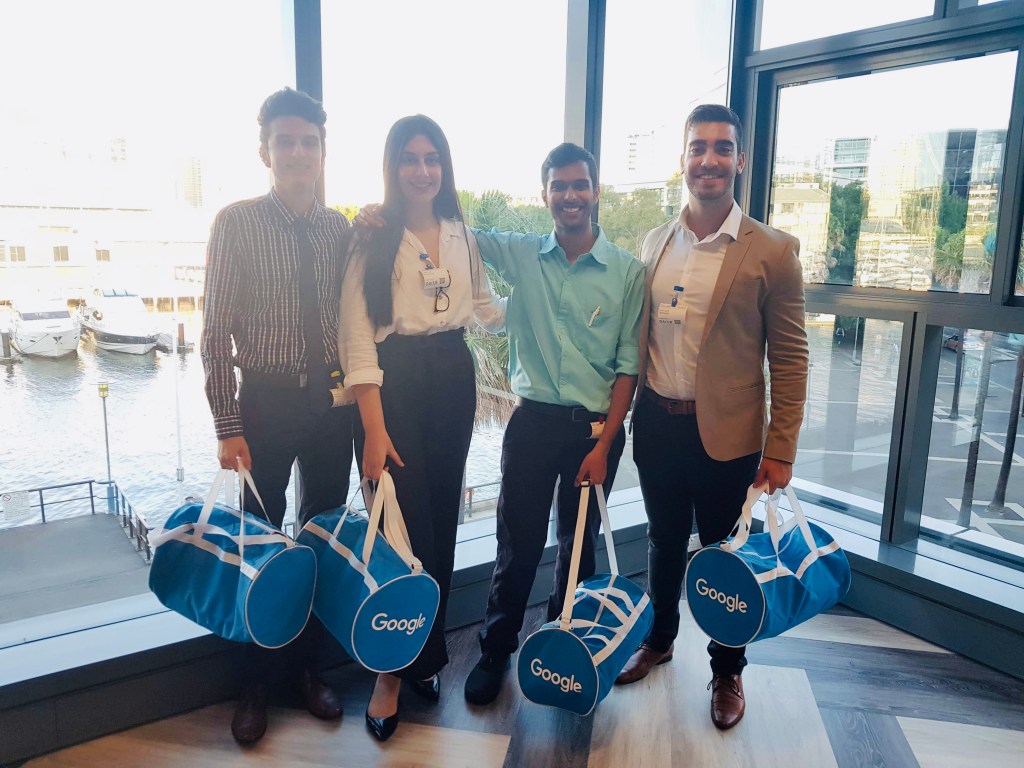
Fortunately, our team (New Jersey) was successful in taking 1st place for this competition across all the universities in Sydney. Our idea focused on developing an online teaching tool that was more accessible for students with special needs. Currently, Google has an existing online teaching tool (Google Classroom) that allows students to use their software to answer questions and access homework with simplicity. However, there was no real focus on children with special needs or impairments. Our product (Google Classroom Squared), tackled this issue and provided an intuitive solution to remediate this issue for students, parents, and teachers.
 NG
NG 